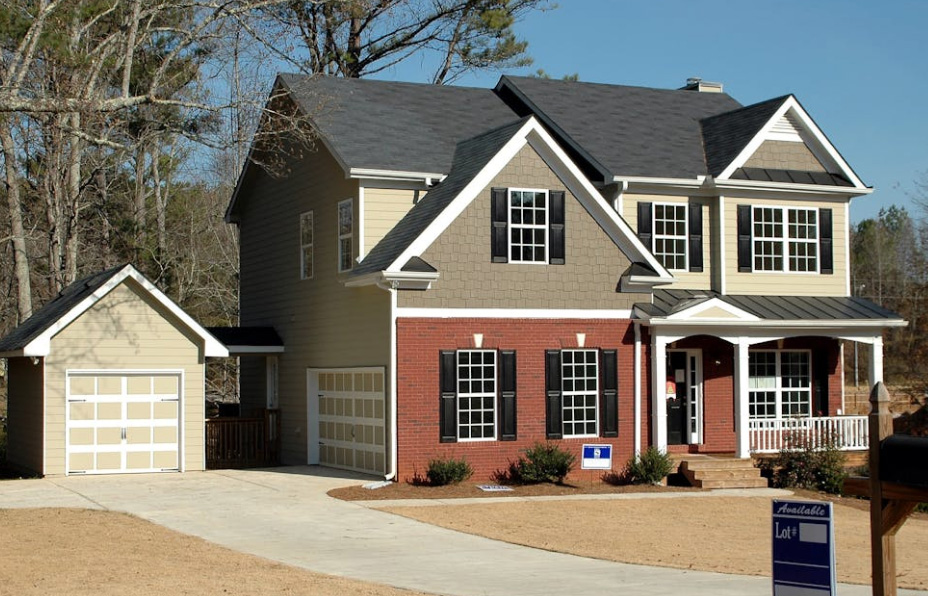
A second home mortgage finances a property you personally occupy for part of the year, not one held mainly for income. Qualification depends on how the property is classified under lender and agency occupancy rules. It isn’t just about how often you plan to use it.
One distinction matters early: a second home mortgage and a second mortgage aren’t the same thing. The two terms describe entirely different financing. A second home mortgage finances another property. A second mortgage is a subordinate lien, such as some home equity loans, secured against a home you already own.
A second home mortgage finances a property the borrower personally occupies for part of the year. It isn’t a loan used primarily for an income-producing investment. Requirements differ from primary-residence financing and may include more equity, stronger reserves, additional pricing adjustments, and specific occupancy rules.
Do you know how much home you can afford?
Most people don’t... Find out in 10 minutes.
Today's Mortgage RatesKey takeaways:
- A qualifying second home must be occupied by the borrower for part of the year.
- Under current Fannie Mae rules, an eligible second home is a one-unit property suitable for year-round occupancy.
- Eligible conforming second-home purchases may reach 90% LTV, meaning 10% down can be possible in qualifying scenarios.
- Second-home loans may receive additional pricing adjustments compared with primary-residence mortgages.
- Rental activity can affect whether the property is treated as a second home or investment property.
- Rental income from the subject second home generally cannot be used to qualify under standard second-home agency treatment.
- Discuss second-home financing with McGowan Mortgages or call (816) 631-9687.
What Is a Second Home Mortgage?
A second home mortgage finances a residence that isn’t your principal home. You still personally occupy it for part of the year.
Under current Fannie Mae second-home occupancy requirements, the property generally must:
- be a one-unit dwelling;
- be suitable for year-round occupancy;
- be occupied by the borrower for some portion of the year;
- remain under the borrower’s exclusive control;
- not be structured as a timeshare;
- not be subject to an agreement giving a management company control over occupancy.
These second-home occupancy requirements come from Fannie Mae’s current Selling Guide, not from a fixed distance or destination rule. A second home doesn’t need to sit a specific number of miles from your primary residence. It also doesn’t need to be in a vacation destination. There isn’t a universal limit on how many days per year it can be rented either. Rental use is addressed separately later in this guide.
Second Home Mortgage vs. Investment Property Loan
Occupancy and intended use, not distance or price, determine whether a property is classified as a second home or an investment property.
| Factor | Primary Residence | Second Home | Investment Property |
| Occupancy | Borrower’s main residence | Borrower occupies part of the year | Primarily held for investment/income |
| Property structure | Program-specific | Generally one unit under standard agency second-home rules | May permit 1-4 units depending on program |
| Rental-income qualification | Program-specific | Subject-property rental income generally not used for qualifying under standard second-home treatment | Rental income may be used subject to program rules |
| Pricing | Generally most favorable occupancy category | May carry additional occupancy-based pricing adjustments | Typically carries investment-property pricing adjustments |
| Primary purpose | Housing | Personal secondary residence | Income/investment |
Investment-property pricing isn’t always the highest of the three categories, and second-home pricing isn’t fixed at one particular level above primary-residence pricing. Both depend on the specific loan file.
Second Home Mortgage Requirements and Down Payment
Second home mortgage requirements depend on several factors working together, including borrower credit, loan-to-value ratio, income, and debt obligations. Reserves, property type, occupancy, loan amount, automated underwriting, and lender overlays all play a role too.
Second home mortgage down payment amounts vary more than many buyers expect. Current Fannie Mae standard eligibility permits up to 90% LTV for eligible one-unit second-home purchases. That means 10% down may be possible in qualifying conforming scenarios. Some conforming second-home loans may permit 10% down, while lenders, jumbo programs, borrower risk factors, or other circumstances may require more.
What Credit Score Is Needed for a Second Home?
There’s no universal credit-score threshold for a second home mortgage. Requirements vary by investor, automated underwriting result, LTV, reserves, loan size, and lender overlays.
Second-home financing can carry different LTV, reserve, pricing, and underwriting requirements than comparable primary-residence financing. Avoid assuming a fixed “680 minimum” or “700 minimum,” since those figures aren’t universal agency rules.
Debt-to-Income Requirements for a Second Home
There’s no single universal DTI ceiling for second-home financing either. The lender considers your existing primary mortgage, the proposed second-home housing expense, and other monthly debts together.
Qualifying income, automated underwriting results, reserves, and other risk factors matter too. Both housing obligations generally need to fit within your overall qualifying profile. No specific maximum DTI applies across every program.
How Much in Reserves Do You Need?
Second-home borrowers may face reserve requirements based on automated underwriting, the number of financed properties, and loan amount. LTV, the specific lender or investor, and jumbo versus conforming status matter too.
There’s no single universal number of months of reserves that applies to every second home mortgage. The figure depends on your complete financial file.
How to Get a Mortgage for a Second Home
- Confirm the property will qualify as a second home rather than an investment property.
- Review your existing mortgage and other monthly debts.
- Review available cash for down payment, closing costs, and reserves.
- Prepare income and asset documentation appropriate to your financial profile. McGowan’s mortgage learning hub covers documentation basics in more depth.
- Get preapproved based on second-home occupancy.
- Compare conforming, jumbo, and other eligible mortgage structures.
- Compare rate, APR, points, fees, and lock terms before closing. The CFPB’s homebuying guide explains Loan Estimates and closing disclosures.
Talk through your second-home mortgage options or call (816) 631-9687.
Are Second Home Mortgage Rates Higher Than Primary Residence Rates?
Current agency pricing includes additional loan-level price adjustments for certain second-home loans. This means second-home mortgage pricing can be less favorable than otherwise comparable primary-residence financing.
There’s no fixed universal spread, such as a flat 0.25%, 0.50%, or 1% difference. Pricing varies with market conditions, credit, LTV, loan size, points, lender, term, and lock period. Fannie Mae specifically applies loan-level price adjustments to certain loans secured by second homes.
| Cost Factor | Primary Residence | Second Home | What Affects the Difference |
| Interest rate | Transaction-specific | Transaction-specific, with second-home pricing adjustments potentially applying | Market, credit, LTV, lender |
| Points | Optional depending on quote | May differ because of occupancy-based pricing | Rate chosen and pricing matrix |
| Reserves | File-specific | May be more substantial depending on the file | Multiple housing obligations and underwriting |
| Mortgage insurance | May apply at higher LTV | May apply where required by program/LTV | LTV and mortgage structure |
Current second-home mortgage rates and primary-residence rates both move with the broader market. Neither should be treated as a fixed baseline. Mortgage rates for second home vs. investment property loans also differ, since each occupancy category carries its own pricing adjustments.
Can I Rent Out a Property With a Second Home Mortgage?
This question deserves a precise answer, since second-home mortgage rental rules are easy to misunderstand. Under current Fannie Mae rules, you must occupy the property for some portion of the year and retain exclusive control.
Fannie Mae also addresses identified rental income. If rental income from the property is identified, the mortgage may still be eligible as a second home. This holds true only if the income isn’t used for qualifying and every other second-home requirement is met.
A few points are worth separating clearly:
- Occasional rental activity doesn’t automatically turn every property into an investment property.
- Rental income generally can’t be relied upon to qualify under standard second-home classification.
- A management arrangement that controls occupancy can make the property ineligible for standard second-home treatment.
- A property intended primarily as an income-producing rental should generally be evaluated as an investment property instead.
Avoid relying on arbitrary rental-day limits, such as 14, 30, 90, or 180 days, as mortgage-classification rules. Those figures can appear in tax rules or specific lender overlays, but they aren’t a universal second-home mortgage standard.
Using Home Equity to Help Buy a Second Home
A borrower may use equity in an existing home to help fund a down payment, closing costs, or other purchase needs. These options are subject to lender and program rules. Three structures commonly come up: a home equity loan, a HELOC, and a cash-out refinance.
A mortgage for second home purchases sometimes gets funded partly this way. Understanding second mortgage vs. home equity loan terminology matters here too. These terms often get confused with second-home mortgage financing itself.
Is a Home Equity Loan a Second Mortgage?
Often yes. A home equity loan is commonly structured as a subordinate lien behind an existing first mortgage. However, “second mortgage” and “second home mortgage” mean completely different things. One describes a lien position on a home you already own. The other describes financing for an entirely different property.
Is a HELOC a Second Mortgage?
A HELOC is commonly secured as a subordinate mortgage, or lien, when an existing first mortgage remains in place. HELOCs are typically revolving credit and may carry variable rates. Home equity loans commonly use fixed repayment structures instead. Neither option is universally cheaper than the other.
Jumbo Second Home Mortgage Options
A loan may be considered jumbo when it exceeds the applicable conforming loan limit for the property’s location. For 2026, the national baseline one-unit conforming limit is $832,750. High-cost limits can reach $1,249,125 for a one-unit property in applicable areas, according to FHFA’s conforming loan limit page.
A jumbo second home mortgage should always be checked against the property’s county-specific current limit before relying on a specific threshold. Jumbo lenders may set their own requirements for credit, reserves, down payment, income, LTV, and property type. There isn’t one universal rule, such as a flat 20% down payment, that applies to every jumbo second-home loan.
How to Compare Second Home Mortgage Lenders
Borrowers often search for the best second home mortgage lenders. A more useful approach compares lenders against a clear evaluation framework rather than a generic ranking.
| Evaluation Factor | What to Ask | Positive Sign | What to Examine Carefully |
| Second-home program access | Which conforming and jumbo options are available? | Multiple relevant options | One program presented as fitting everyone |
| Pricing transparency | What rate, APR, points, and lender fees apply? | Comparable written estimates | Headline rate without assumptions |
| Occupancy knowledge | How will the property be classified? | Clear explanation of second-home vs investment rules | Casual assumptions about rental use |
| Reserves and underwriting | What assets will need to be documented? | Requirements explained before offer/closing | Requirements disclosed late |
| Communication | Who manages the loan and conditions? | Clear point of contact | Unclear or inconsistent process |
Mortgage Broker vs. Bank
A mortgage broker may access multiple lenders or investors, while a bank generally offers its own lending products. Neither is automatically cheaper or better for a second home mortgage. Learn more about McGowan Mortgages and how the team works with second-home buyers.
Can You Deduct Mortgage Interest on a Second Home?
This is a tax topic, so this section stays concise and factual. IRS Publication 936 states that mortgage-interest deductions can apply to qualified debt secured by a main home and a second home. That treatment depends on debt limits, how loan proceeds were used, itemized-deduction rules, and other tax requirements.
Mortgage interest on a qualifying second home may be deductible depending on the debt, property use, and the taxpayer’s circumstances. Consult current IRS guidance or a qualified tax professional.
Mortgage occupancy classification and IRS tax treatment are separate questions, even though they both involve the same property. A property can face mortgage occupancy rules, rental-income rules, and federal tax-use rules at the same time. IRS rental-day tests can affect whether a rented property qualifies as a second home for federal tax purposes. Those tax tests don’t determine whether a lender can classify the property as a second home for mortgage underwriting.
Preparing for a Second Home Mortgage
Before shopping for a second home, a few questions are worth answering first. Confirm that the intended property use fits second-home occupancy rules rather than investment use. Review how much cash is available for down payment, closing costs, and reserves.
Check whether the loan will fall within conforming or jumbo limits for the property’s location. Consider how the full two-home obligation, including both mortgage payments together, affects your overall qualification.
Is a Second Home Mortgage Right for Your Plans?
A second-home mortgage works best when the intended property use clearly fits second-home occupancy rules and you can comfortably support both properties. Down payment, reserves, and loan classification all deserve a closer look before you commit.
Conforming versus jumbo status, rate and APR, occupancy, intended rental use, and total monthly obligations should all factor into the decision. Weighing these pieces together, rather than focusing on one number, tends to produce a more realistic plan.
Talk with McGowan Mortgages about second-home financing or call (816) 631-9687.
Second Home Mortgage FAQs
What Credit Score Is Needed for a Second Home Mortgage?
There’s no universal minimum across all second-home programs. Eligibility depends on the lender, investor, automated underwriting, LTV, loan size, and reserves. Your overall borrower profile matters too, so figures vary from one file to the next.
How Much Down Payment Do You Need for a Second Home?
Current Fannie Mae standard eligibility permits up to 90% LTV for eligible one-unit second-home purchases, meaning 10% down may be possible. Other programs, lenders, jumbo loans, or borrower profiles may require more than that minimum.
Are Second Home Mortgage Rates Higher?
Second-home financing may carry additional occupancy-based pricing adjustments compared with an otherwise similar primary-residence loan. The exact difference varies with market conditions, your credit profile, and the specifics of your transaction.
Can I Rent My Second Home?
Potentially, but the property must still satisfy the lender’s second-home occupancy requirements. Under current Fannie Mae rules, identified rental income generally can’t be used to qualify for a loan delivered as a second home.
Can I Use a Home Equity Loan to Buy a Second Home?
Potentially. A home equity loan, HELOC, or cash-out refinance may provide funds that can be used toward another property. Each option is subject to qualification and source-of-funds requirements from your lender.
Is a Second Home Mortgage the Same as a Second Mortgage?
No. A second home mortgage finances another residence entirely. A second mortgage is an additional lien secured by a property you already own, such as a home equity loan or HELOC.
Can I Deduct Mortgage Interest on a Second Home?
Possibly. IRS rules allow deductions for qualifying home mortgage interest under specific circumstances and debt limits. Tax treatment depends on the property, the debt amount, how it’s used, and your individual situation.
Do I Qualify for a Second Home Mortgage?
Qualification depends on income, debts, credit, reserves, property classification, loan amount, LTV, and lender or investor requirements. A preapproval conversation can identify which current options fit your specific financial situation.
Do you know how much home you can afford?
Most people don’t... Find out in 10 minutes.
Today's Mortgage Rates